Getting Ready for Delivery Day
We recognize that placing heavy infrastructure in remote hunting camps or rural agricultural land requires exact coordination. Standardizing your container home delivery requirements is the dividing line between a fast move-in and a stressful logistical delay.
A pre-built container home is heavy, finished, and rigid, so delivery is a planned operation.
Our team will break down the specific truck sizes, site clearance facts, and utility preparations you need to handle right now. Preparing the pad and access ahead of time makes the final set remarkably quick.
Flatbed and Tiltbed Delivery
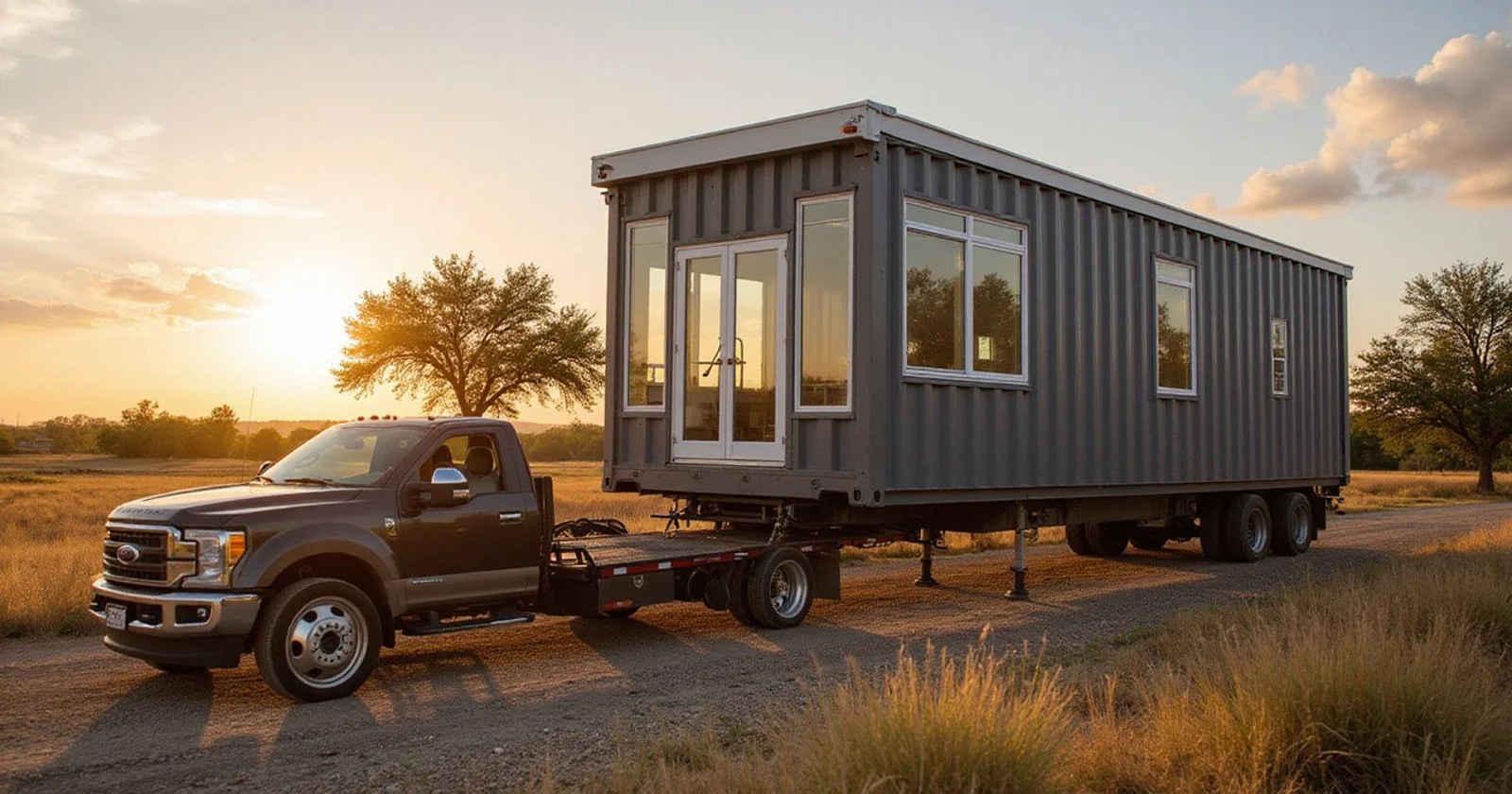
Understanding exactly how a container is delivered helps you prepare the site properly. We deliver on a flatbed or tiltbed trailer depending on your specific site conditions. Your choice of delivery truck dictates the required maneuvering space and on-site lifting equipment needed.
A tiltbed trailer can slide the unit directly onto a prepared pad with minimal extra equipment. This method suits tighter or remote agricultural lots because the trailer simply tilts down and pulls away.
Our drivers need about 60 feet of straight clearance to drop a 20-foot unit from a tiltbed. Dropping a 40-foot container requires 100 feet of straight run-out space.
| Delivery Method | Required Straight Clearance | On-Site Equipment Needed | Best For |
|---|---|---|---|
| Tiltbed Trailer | 60 to 100 feet | None (Drops directly) | Standard lots with long driveways |
| Flatbed Trailer | Minimal (Truck length) | Crane or heavy forklift | Tight spaces or elevated pads |
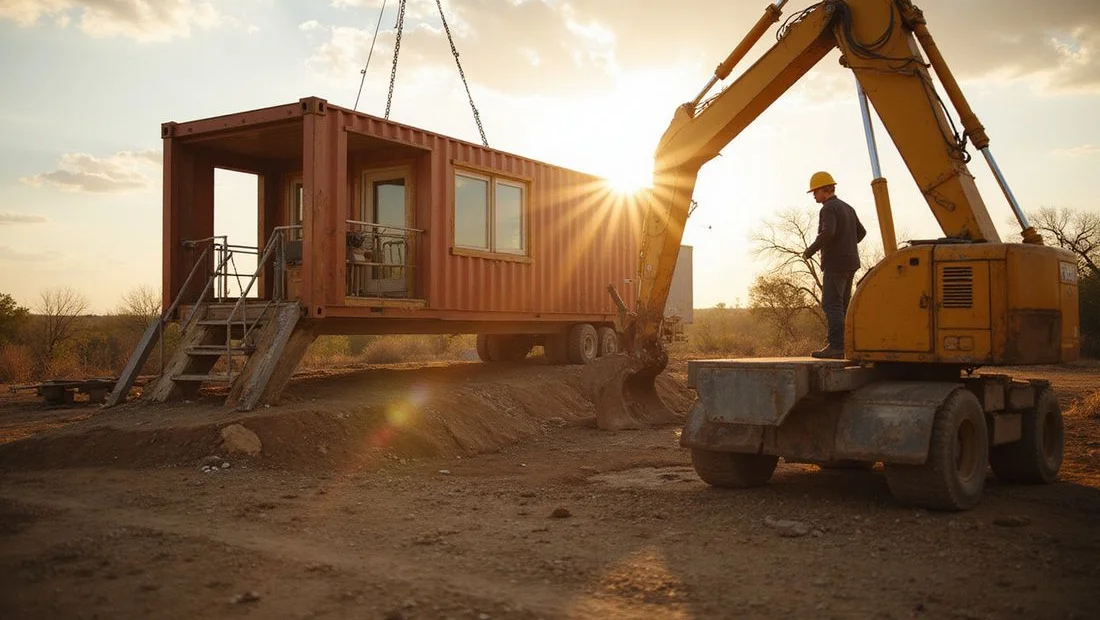
A flatbed uses a standard trailer and requires separate lifting equipment to place the home. You will need to rent a local crane to lift the unit off the flatbed.
We recommend budgeting for current US crane rental rates, which average between $300 and $1,500 per hour in 2026. Selecting the method that fits your access prevents costly day-of-delivery delays.
Site Access and Clearance
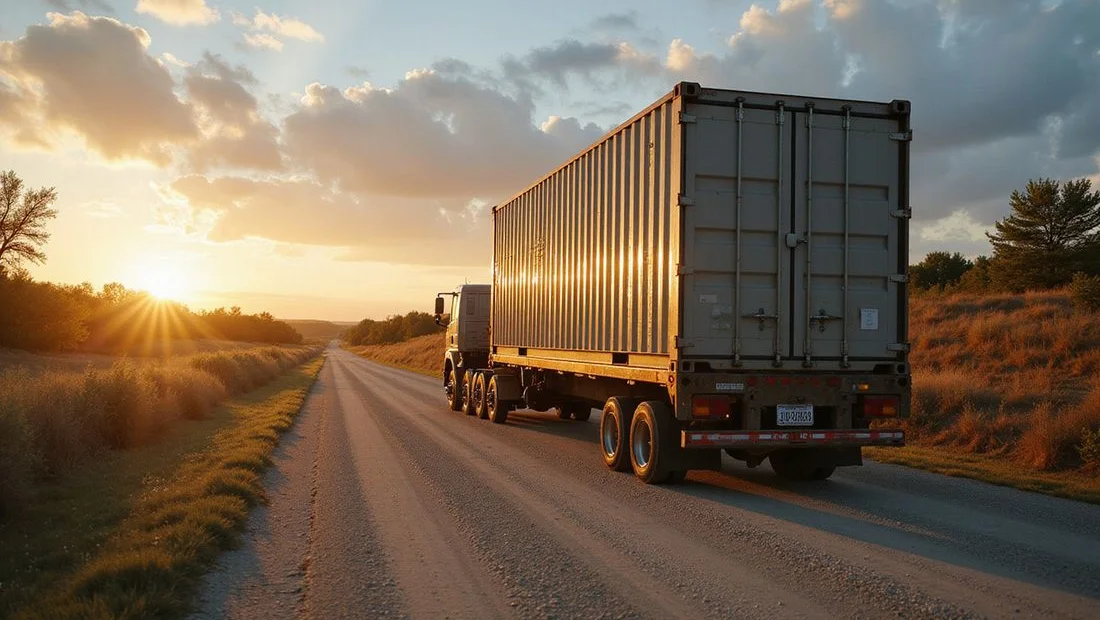
Our logistics team requires a firm, reasonably level path with a strict minimum of 14 feet of vertical clearance. Safe container home truck access also demands a driving lane that is 12 to 14 feet wide.
The truck must bypass overhanging tree branches, low rural power lines, and structural eaves. On remote hunting properties or agricultural lots, you will often need to clear brush or lay fresh compact gravel to improve a dirt track.
Here are the essential clearance rules for US deliveries:
- Vertical Height: 14 feet of unobstructed airspace.
- Horizontal Width: 12 to 14 feet of clear driving lane.
- Road Grade: Less than a 10% slope to prevent traction loss.
- Surface Quality: Compacted gravel, asphalt, or concrete.
We review the proposed route before delivery day so there are no expensive surprises. Delivery trucks are heavy and can easily lose traction on soft ground or steep hills.
Our drivers will not attempt delivery on muddy, flooded, or deeply rutted terrain. Ensure your neighborhood approach roads are standard two-lane marked roads at a minimum.
Leveling at the Drop
We ensure the unit lands on a level pad over a foundation matched to your local soil conditions. A proper foundation prevents the rigid steel structure from twisting over time.
The entire weight of the structure must distribute evenly across the bottom steel corner castings. Uneven placement causes the steel doors to bind and become difficult to open.
Pro-Tip: Never place a container directly on bare soil. The ground will settle unevenly, and the lack of airflow will trap moisture against the steel flooring.
Our setup crews will make minor leveling adjustments at the exact time of the set. A pad that is completely prepared and a foundation that is already cured make this step incredibly fast.
Pier and beam foundations remain the most popular choice for rural US container homes. You can expect to install about six concrete piers for a 40-foot container.
We suggest budgeting between $600 and $850 per concrete pier based on 2026 US construction rates. This elevated foundation style requires minimal excavation and works perfectly on uneven agricultural land.
Utility Hookup Readiness
Our factory team ships every home with the electrical and plumbing systems completely trimmed out. Having your external utility connections roughed in means you can hook up the same day the unit lands.
A standard electrical setup uses a 50-amp, 120V/220V twist-lock receiver. This RV-style connection allows you to simply plug a heavy-duty supply line directly into the exterior wall.
| Utility Type | Standard Connection Standard | Common Rural Solution |
|---|---|---|
| Electrical | 50-amp twist-lock receiver | Dedicated breaker box or generator |
| Plumbing (Waste) | 3-inch PVC pipe | 1,500-gallon concrete septic tank |
| Plumbing (Water) | 3/4-inch fresh water inlet | Private well water pump |
We design the plumbing outtakes to connect directly to municipal lines or off-grid systems. The standard waste outlet is a 3-inch PVC pipe that routes blackwater away from the home.
Rural properties usually connect this waste pipe directly to a private 1,500-gallon concrete septic tank. Standardizing these hookups makes your transition into the home fast and predictable.
What to Have Ready
We want your delivery day to be a complete success without any last-minute stress. You must finalize the truck route, cure the concrete foundation, and trench the utility lines before the crane arrives.
Bring everything together with our comprehensive guide on rural site prep for specific groundwork details. A cleared path and a level pad guarantee your pre-built home lands safely and securely.
Our support staff is ready to help you review your specific land layout. Contact us today with your site photos so you can start preparing for move-in.