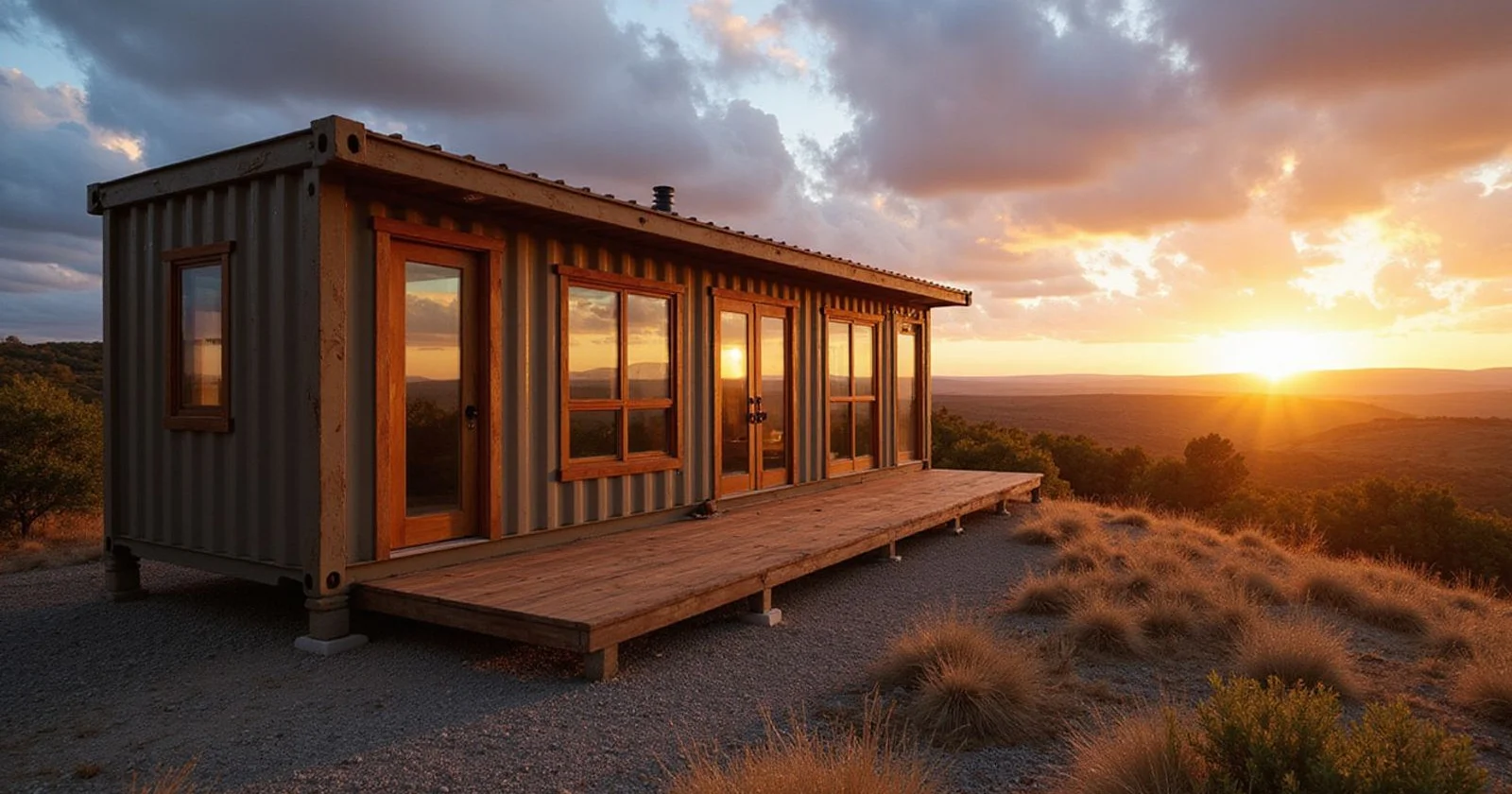
Many rural landowners face the exact same frustration: they own gorgeous acreage but lack a fast, reliable way to house guests.
You know how hard it is to get reliable contractors out to remote properties for a traditional build. The current data makes this delay even more costly. Average daily rates for a container home Airbnb Hill Country property now sit between $258 and $334.
We are going to break down the specific construction costs, analyze the best local markets, and walk through the exact off-grid setups our team uses to launch successful properties.
A Standout Container Home Airbnb Hill Country Rental
The Texas Hill Country draws travelers looking for something memorable, and a container home delivers exactly that. It is a design-forward, photogenic stay that costs less to build than a traditional cabin and stands up to year-round rental use.
Our team at ATX CONTAINER HOMES focuses on providing premium modular construction solutions that prioritize both durability and design excellence. This aesthetic edge is critical for rural landowners and agritourism investors competing for bookings. Unique structures consistently outperform standard homes on booking platforms.
We see these distinct units capturing premium weekend rates, especially during peak seasons like October and December. Capturing attention on a crowded app requires intense visual appeal.
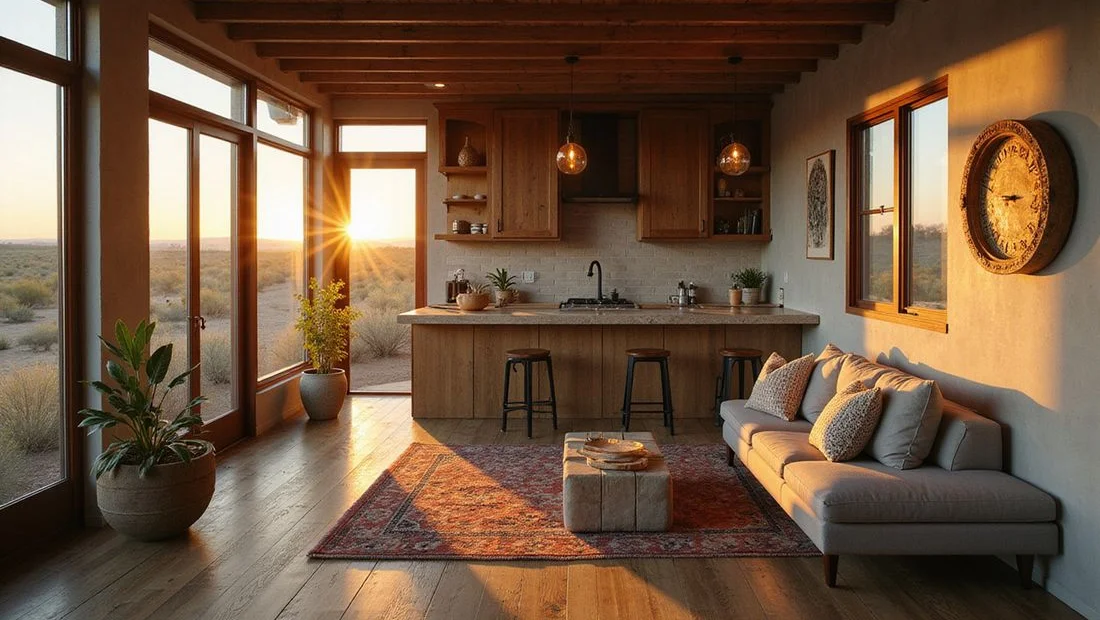
- Instagram-Worthy Appeal: Guests pay a premium for visually distinct architecture and modern industrial aesthetics.
- Immersive Nature Integration: Floor-to-ceiling windows connect the interior space directly with the natural landscape.
- Eco-Friendly Branding: Sustainable building practices attract environmentally conscious tourists willing to spend more.
ROI Framing for Short-Term Rentals
The math on a container home short term rental Texas investment works because your build cost is significantly lower than a comparable stick-built cabin while nightly rates hold strong.
A finished, styled unit on desirable land recovers its initial cost much faster than a conventional structure.
Current market figures show that a custom container build typically runs between $150 and $350 per square foot. Traditional site-built homes in Texas often exceed $400 per square foot when factoring in remote labor premiums and material transport.
Our clients appreciate how low maintenance requirements keep long-term operating costs down. Faster deployment means you can start collecting that $334 average nightly rate months ahead of a standard construction schedule.
| Feature | Container Rental | Stick-Built Cabin |
|---|---|---|
| Average Build Time | 3 to 8 months | 6 to 12 months |
| Cost Per Square Foot | $150 to $350 | $200 to $400+ |
| Remote Labor Needs | Minimal (Prefabricated) | Extensive (On-site crews) |
| Structural Material | Weather-resistant Corten steel | Wood framing (vulnerable to pests) |
Popular Hill Country Markets
Fredericksburg, Wimberley, and the surrounding towns pull massive, steady short-term rental demand.
Running a successful container Airbnb Fredericksburg operation means paying close attention to local regulations. A unique container stay near these markets competes incredibly well against generic listings and earns a premium for being different.
We always advise investors to look closely at the Gillespie County Extra-Territorial Jurisdiction (ETJ). Properties located strictly inside the Fredericksburg city limits face tough R1 and R2 zoning laws that prohibit new unoccupied rentals. Moving just outside the city lines into the county removes many of those regulatory hurdles.
This strategic placement allows you to capitalize on the 1,300-plus active Airbnb demand in the area without the municipal red tape. You still get the bookings without the constant administrative headache.
- Hotel Occupancy Tax (HOT): Operators must collect a 6 percent state tax, plus local county taxes.
- Permit Renewals: City properties require annual registration and strict safety inspections.
- Zoning Limits: Always verify deed restrictions, even in unincorporated county land.
- Platform Collection: Airbnb and VRBO often remit state taxes automatically, but you must verify local county collections.
Unit Sizing for Guests
A 20ft unit makes an intimate couples’ getaway, while a 40ft model sleeps a small group with a full kitchen and living space. You must match the physical footprint to your target demographic.
Our design process ensures every square inch is optimized for comfort and flow. For detailed dimensions and layout strategies, use our complete guide on container home sizes.
Agritourism investors often prefer clustering several smaller units to maximize privacy for multiple couples. Conversely, families visiting the local wineries typically look for the larger, combined spaces.
| Specification | 20ft Container | 40ft Container |
|---|---|---|
| Internal Square Footage | ~146 sq ft | ~285 sq ft |
| Ideal Guest Profile | Solo travelers or couples | Small families or friend groups |
| Amenity Capacity | Kitchenette and 3/4 bath | Full kitchen and standard bath |
| Site Footprint | Highly compact, fits tight spaces | Requires clear, flat acreage |
Durability and Low Maintenance
A rental takes serious abuse over its lifespan.
The heavy-duty steel shell, closed-cell spray foam insulation, and finished interior of these units hold up to constant turnover with very little upkeep.
We use Corten steel because it naturally resists corrosion and completely eliminates termite threats. This heavy-duty exterior protects your profit margins over years of heavy use.
Hunters wanting durable alternatives to flimsy RVs find this structural integrity incredibly appealing. The airtight insulation also drastically reduces cooling costs during brutal, 100-degree Texas summers.
- Pest Resistance: Steel construction blocks rodents and wood-boring insects entirely.
- Weather Tolerance: Engineered to withstand extreme winds and heavy rain without structural damage.
- Thermal Efficiency: Spray foam prevents condensation and rot inside the wall cavities.
- Turnover Speed: Smooth interior finishes make deep cleaning between guests fast and efficient.
Off-Grid Options
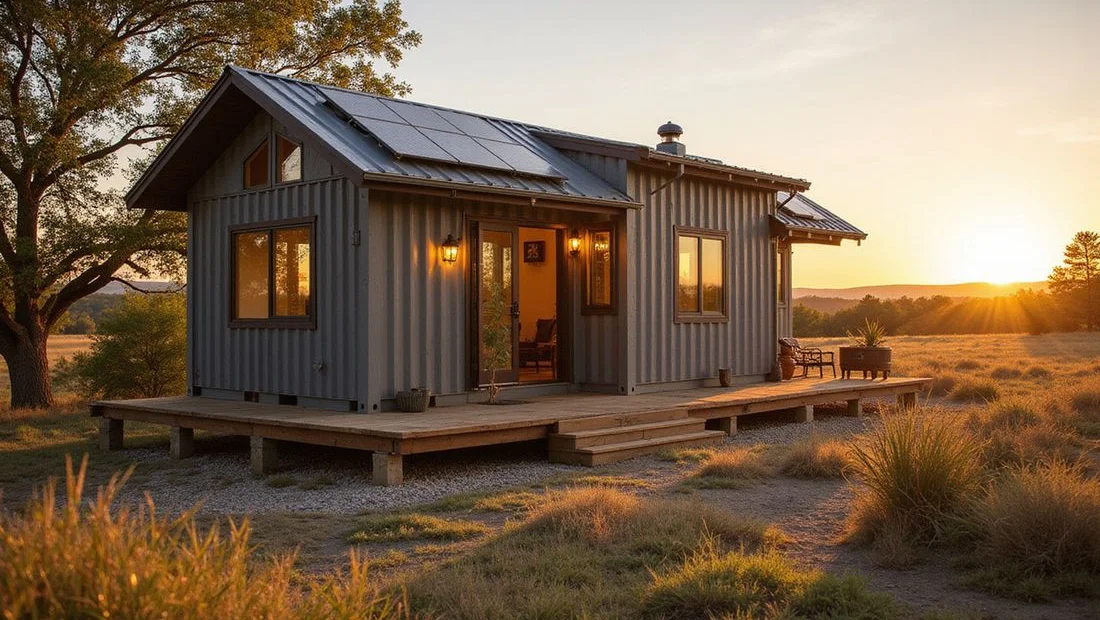
Remote acreage with absolutely no municipal utilities can still host a highly profitable rental. We spec high-capacity solar arrays, rainwater storage, and septic or composting systems so an off-grid stay becomes an appealing feature, not a limitation.
Modern power systems easily handle the electrical loads of a comfortable cabin. A standard 5.9-kilowatt solar package with lithium iron batteries provides enough power to run an 18,000 BTU mini-split air conditioner reliably.
Our off-grid solutions typically run between $20,000 and $30,000, depending on your specific climate needs. To explore the best configuration, start with a pre-built model sized properly for your guests.
- Solar Array: Roof-mounted panels paired with a 5KW inverter for continuous daytime power.
- Battery Bank: High-capacity lithium batteries for overnight climate control and appliance use.
- Water Management: Large catchment tanks equipped with redundant filtration systems for safe domestic use.
- Waste Systems: Low-maintenance composting toilets or compact septic systems that avoid expensive trenching.
Starting your container home Airbnb Hill Country project requires the right foundation and a fast execution strategy. Review your local zoning laws, finalize your guest capacity needs, and contact our team today to get your custom build on the schedule.