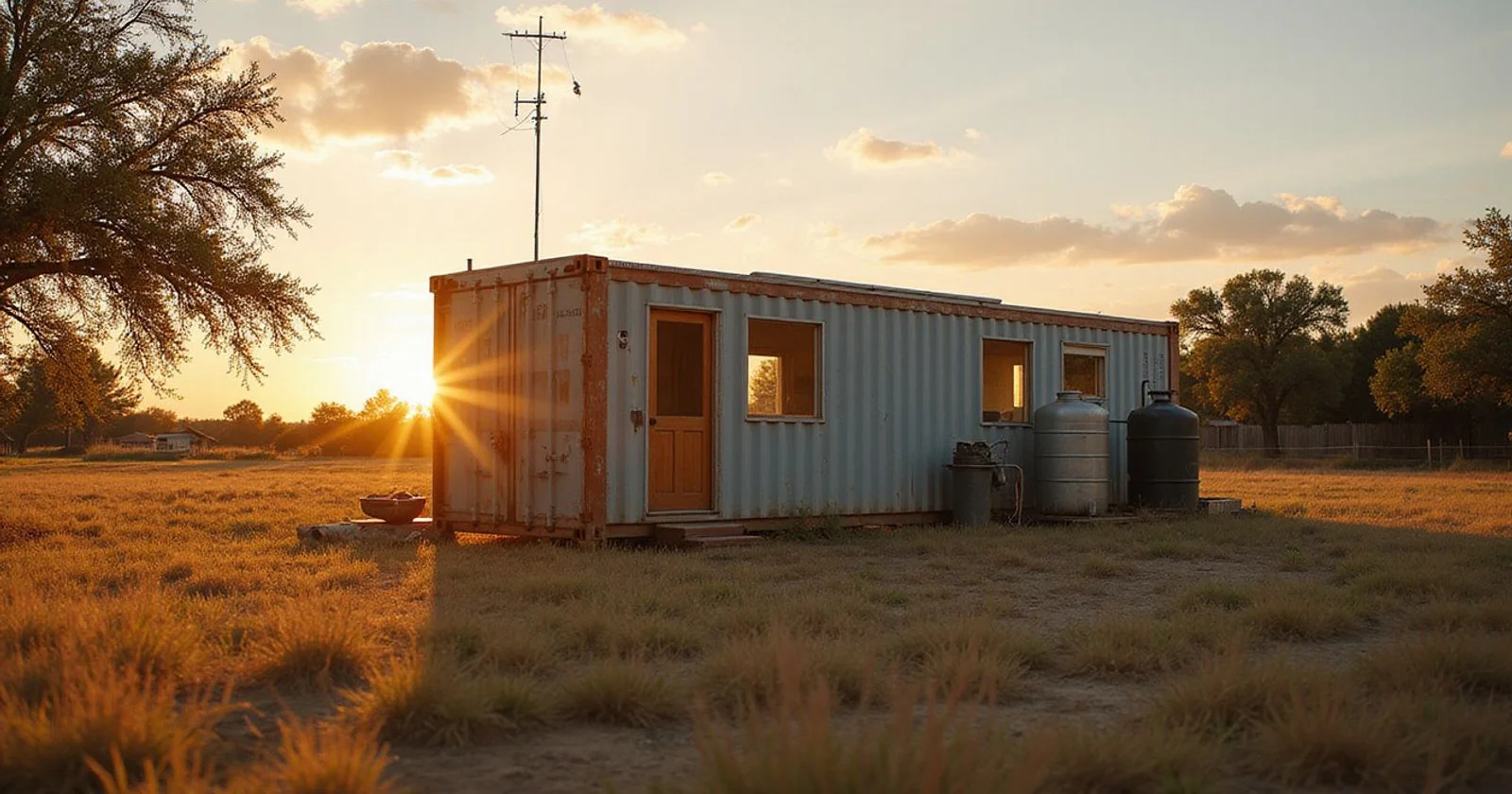
Running a Cabin With No Utilities: Off Grid Container Cabin Texas
Planning an off grid container cabin texas project often stalls when owners discover utility drop costs can easily exceed fifty thousand dollars across the US.
We know this frustration well, because ATX CONTAINER HOMES focuses on providing premium modular and container-based construction solutions that prioritize durability and design excellence.
Building a self-reliant setup allows landowners to bypass the traditional grid entirely. Let’s look at the four core systems required to operate independently, review the latest 2026 data on component lifespans, and walk through the exact setup needed for a reliable site.
Solar Array and LiFePO4 Battery Sizing
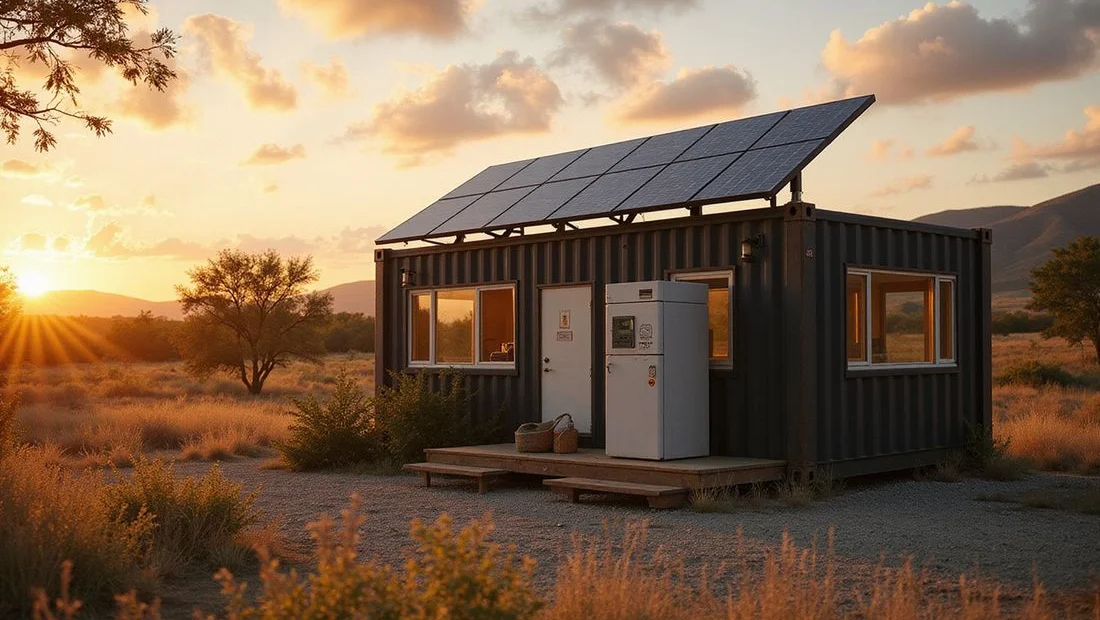
Sizing a solar setup requires calculating your specific daily watt-hour usage and pairing it with Lithium Iron Phosphate batteries for energy storage. A typical weekend hunting cabin only needs about 1,200 to 2,400 watt-hours per day, while a full-time residence running air conditioning requires significantly more.
Our team always recommends LiFePO4 technology over traditional lead-acid options for these rural builds. These modern cells routinely deliver 3,000 to 6,000 charge cycles, meaning they easily last ten to fifteen years even with daily use. Lead-acid batteries usually fail after just three to five years because they cannot handle deep discharges past 50 percent capacity.
| Battery Type | Usable Capacity | Average Lifespan (2026 Data) | Maintenance |
|---|---|---|---|
| LiFePO4 | 80% to 100% | 10 to 15 Years | Zero |
| Lead-Acid | 50% Maximum | 3 to 5 Years | Requires watering |
We specifically size the inverter and battery bank to handle the sudden power surge of well pumps or refrigerators. This strategy prevents sudden system shutdowns during the peak heat of summer. Proper component matching keeps your container cabin solar setup running smoothly year-round.
Backup Generator
A backup generator provides essential insurance to keep your battery bank charged during extended periods of heavy cloud cover or increased power usage. Integrating a dual-fuel inverter model ensures you never lose power at the worst possible moment.
Our typical cabin installations feature a dedicated 30-amp generator inlet wired directly to the solar charge controller. Using a reliable 2,200-watt inverter generator, such as the Honda EU2200i, offers quiet operation and high fuel efficiency. A gallon of gasoline can run these highly efficient units for up to eight hours on a quarter load.
We suggest keeping propane on hand as a secondary fuel source because it stores indefinitely without degrading like gasoline does. Relying on propane eliminates the hassle of cleaning clogged carburetors after a property sits vacant for months.
- Skipping fuel stabilizer in stored gasoline tanks.
- Failing to ground the generator chassis properly.
- Placing the exhaust vent too close to cabin intake fans.
- Running the unit at maximum load continuously.
Rainwater Harvesting and Greywater
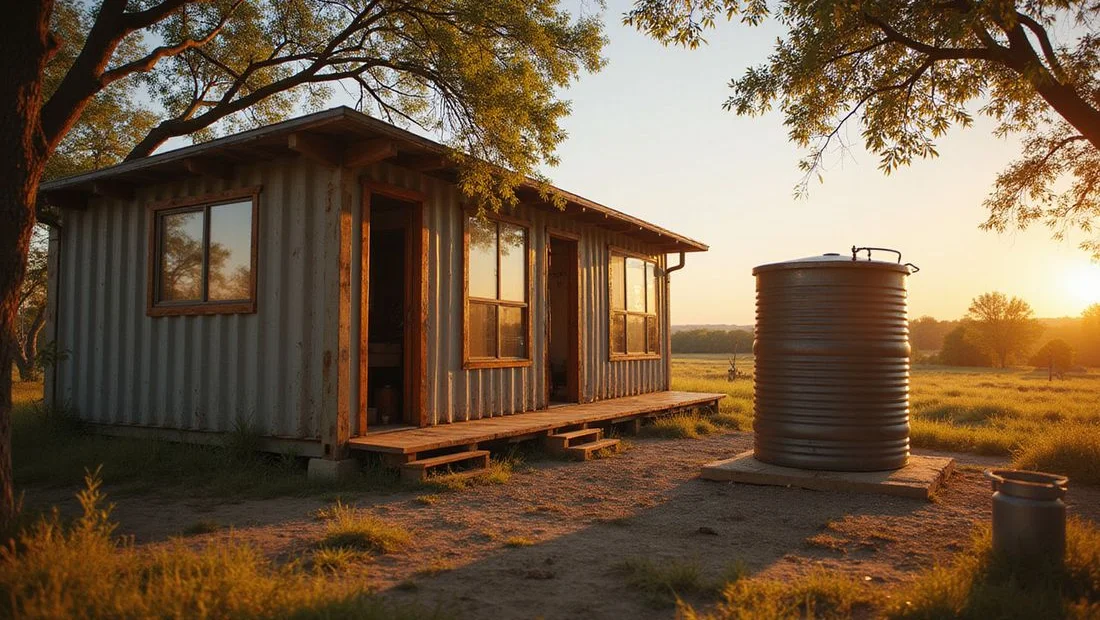
Collecting rainwater off the roof and reusing greywater for irrigation drastically reduces the need to haul water to a remote site. A standard 20-foot container cabin features 160 square feet of roof space, which can yield roughly 100 gallons of water for every inch of rainfall.
We install heavy-duty gutters and leaf guards to direct this runoff into UV-protected IBC totes or poly cisterns. A single 275-gallon IBC tote provides plenty of capacity for occasional weekend visits. Texas Property Code protects rainwater harvesting, and most US states encourage it without requiring complex permits for small residential setups.
Our preferred plumbing designs route sink and shower runoff through a basic greywater filtration trench. This simple system safely irrigates the surrounding landscape while keeping the primary septic system from overflowing. Routing non-potable water properly extends the life of your off grid hunting cabin water septic arrangement.
- A debris filter or first flush diverter to keep dirt out of the tank.
- A food-grade, opaque storage cistern to prevent algae growth.
- A 12-volt on-demand water pump to pressurize the cabin lines.
Composting or Incinerating Toilet
A composting or incinerating toilet manages human waste cleanly without requiring a sewer connection, a water hookup, or a traditional leach field. These modern fixtures separate liquids from solids, completely eliminating the foul odors associated with old-fashioned outhouses.
We highly recommend urine-diverting models like the Nature’s Head composting toilet for compact floor plans. These units feature a built-in exhaust fan that vents continuously to the outside. According to the Texas Commission on Environmental Quality, composting toilets are legal, though you must verify specific On-Site Sewage Facility rules with your local county inspector.
Our customers who host frequent guests sometimes prefer incinerating toilets, such as the Cinderella system, which burns waste into sterile ash. These models require a steady propane supply and a dedicated exhaust flue. Cabins that see heavy, full-time use usually require installing a small traditional septic system to handle the increased volume effectively.
| Toilet System | Water Required | Power Required | Best Use Case |
|---|---|---|---|
| Urine-Diverting Compost | None | Minimal (12V fan) | Weekend hunting trips |
| Propane Incinerating | None | 120V and Propane | High-end guest cabins |
| Small Septic | High | None (Gravity) | Full-time residency |
Propane Tankless Water Heater
A propane tankless water heater delivers instant, unlimited hot water without draining your valuable solar battery bank. Heating water electrically consumes massive amounts of energy, making gas-powered units the smartest choice for off-grid applications.
We frequently install compact, high-efficiency units like the CAMPLUX CA318 or Rinnai V53DeP for our builds. A standard showerhead requires about 1.5 to 2.0 gallons per minute of flow. These specific heaters easily produce 3.18 to 5.3 gallons per minute, ensuring strong water pressure even during cold winter mornings.
Our typical installation pairs the heater with two standard 20-pound propane tanks and an automatic switchover valve. This configuration guarantees a hot shower is always ready, even if one cylinder runs empty mid-week. Keeping the hot water system entirely separate from the electrical load frees up your solar capacity for lights, laptops, and refrigerators.
- Always install a sediment filter on the water intake line.
- Drain the unit completely before freezing temperatures hit.
- Vent indoor-rated models strictly according to manufacturer specifications to prevent carbon monoxide buildup.
When you integrate these four systems properly, your container cabin functions comfortably in any remote location. We strongly suggest finalizing your utility plan before clearing your build site for your off grid container cabin texas project. Taking the time to map out your infrastructure saves thousands of dollars down the line. For practical advice on orienting your structure, leveling the foundation, and preparing your property, read our complete guide on setting up on rural land.