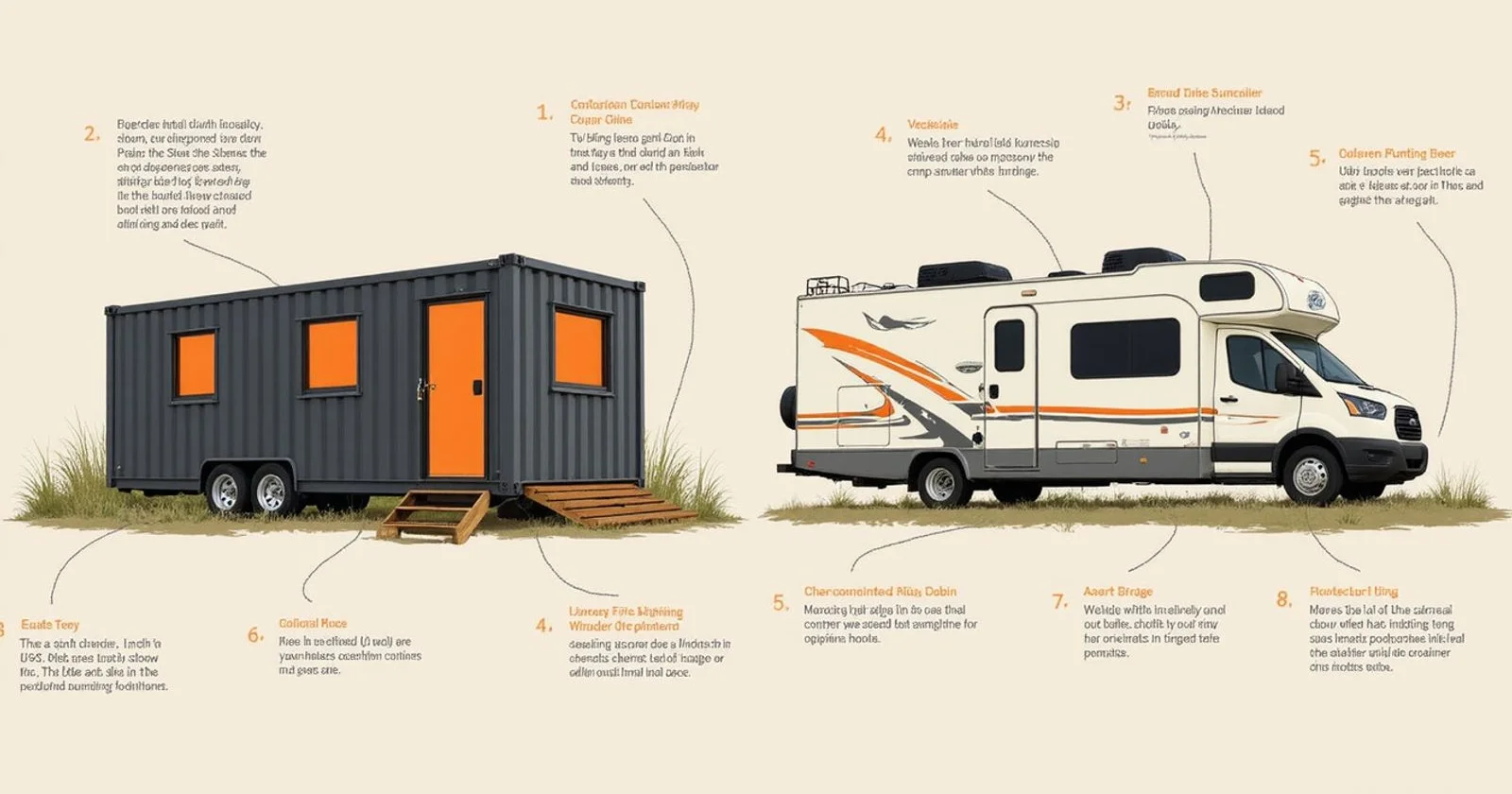
The Lease Shelter Decision
Our team understands the frustration of driving hours to a remote property only to spend the weekend fixing a leaky roof.
The debate over a container cabin vs rv hunting lease comes down to how you value your free time. The traditional camper serves as the default option for many landowners.
We consistently see that an RV fails to provide a reliable long-term solution for a rugged environment. A permanent structure simply performs better over the long haul.
Let’s look at the 2026 data to compare both options across the factors that actually impact your season.
Durability and Weather
We build container cabins from Corten steel designed specifically to survive harsh ocean crossings. Standard RVs consist of thin fiberglass and aluminum siding meant for paved highways.
This structural difference becomes critical during severe weather events across the US. A typical camper siding will dent from a light hailstorm.
Our engineering ensures that an anchored shipping container can withstand wind speeds up to 175 mph. Here are the core structural differences you should consider for a remote property:
- Wind Resistance: Anchored containers survive 175 mph winds, while tall RVs can flip at 60 mph.
- Exterior Material: Corten steel resists corrosion, whereas fiberglass delaminates under heavy UV exposure.
- Roof Integrity: Welded steel roofs block falling branches much better than thin rubber RV membranes.
On a rural lease that sees intense sun and hail, the steel cabin holds up perfectly while an RV simply degrades.
Maintenance
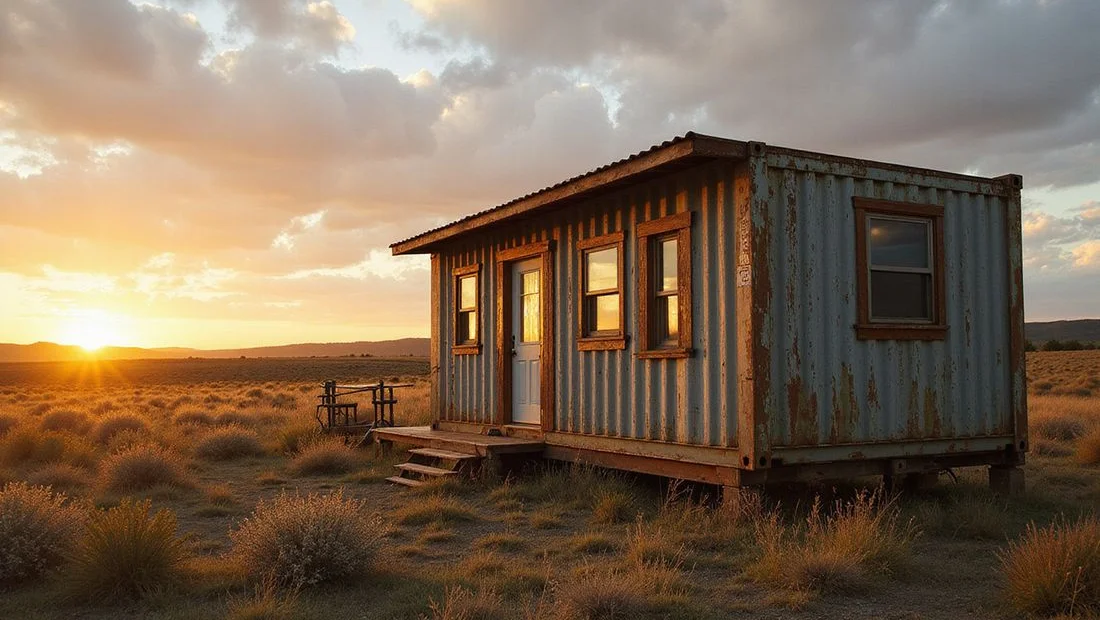
We know that a hunting trip gets ruined quickly when you have to spend the first day fixing broken gear. An RV requires constant upkeep just to stay habitable in the woods.
Industry data from 2026 shows that average RV maintenance costs range from $1,000 to $2,500 every single year.
Our container units eliminate these frustrating weekend chores completely. The thin rubber roof on a typical camper requires regular inspections and resealing, or water intrusion will rot the wooden frame within months.
A solid steel structure prevents mice from chewing through the floorboards to nest in your insulation. We see slide-out motors on campers fail frequently due to dust and lack of use.
A container cabin mostly just sits there ready for you. This minimal maintenance approach means less time wrenching and more time hunting.
Depreciation and Value
We consider depreciation to be the quiet killer for recreational vehicles. They drop in value rapidly the moment you purchase them.
A new travel trailer typically loses 20% to 30% of its initial value during the very first year. Our steel cabins take the opposite financial trajectory.
A permanent structure attached to a foundation can actually appreciate along with the property itself. Real money gets lost when you let a camper rot in a field.
| Financial Factor | RV / Travel Trailer | Container Cabin |
|---|---|---|
| First Year Value Drop | Loses 20% to 30% | Retains value |
| 5-Year Retention | Retains roughly 50% | May appreciate with property |
| Lifespan | 10 to 15 years | 50+ years with paint upkeep |
We strongly recommend an investment in steel to secure a shelter that holds strong for generations. Over several years on a lease, that financial difference adds up to thousands of dollars saved.
Financial math always favors durable assets.
Comfort
Our standard builds focus heavily on creating a comfortable interior climate. A real building requires proper insulation to handle temperature extremes.
Typical camper walls feature thin, 1-inch fiberglass batting that rarely achieves an R-4 insulation rating. We apply thick closed-cell spray foam insulation to achieve an R-6 or R-7 rating per inch.
Upgraded Temperature Control
This dense foam layer seals every tiny gap to block drafts completely. A ductless mini-split HVAC system operates silently to cool the space fast.
We guarantee you will sleep better in a solid hunting cabin vs camper trailer with a small rooftop AC unit. The difference in rest quality directly impacts your focus during early morning hunts.
You will appreciate the upgrade immediately.
Theft Resistance and Total Cost Over Time
We prioritize security because remote properties sit vacant for long stretches. A standard camper presents an incredibly easy target for rural thieves.
Most travel trailers use factory-standard CH751 keys for their exterior storage compartments. Our lockable steel cabins feature heavy-duty doors and welded lock boxes.
- Entry Security: Steel doors withstand blunt force, while fiberglass RV doors splinter quickly.
- Storage Protection: Welded lock boxes protect padlocks from bolt cutters.
- Theft Prevention: A heavy, foundation-mounted cabin cannot be hitched and stolen.
A thief cannot simply back up a truck and tow a heavy structure away. You must add up durability, maintenance, depreciation, and security to find the true financial impact.
We find that this upfront cost gets offset entirely by lower total expenses over the years you own it. The peace of mind alone justifies the investment.
Protection of your assets comes first.
The Verdict
We firmly conclude that a container cabin wins on nearly every measure that matters over time. When comparing a container cabin vs rv hunting lease, a permanent shelter simply outperforms a rolling chassis.
The upfront investment pays dividends through superior comfort and zero weekend maintenance. Our team invites you to explore the container hunting cabins lineup today.
Find the exact layout to match your camp and upgrade your hunting experience. Make the smart choice for your remote property this season.