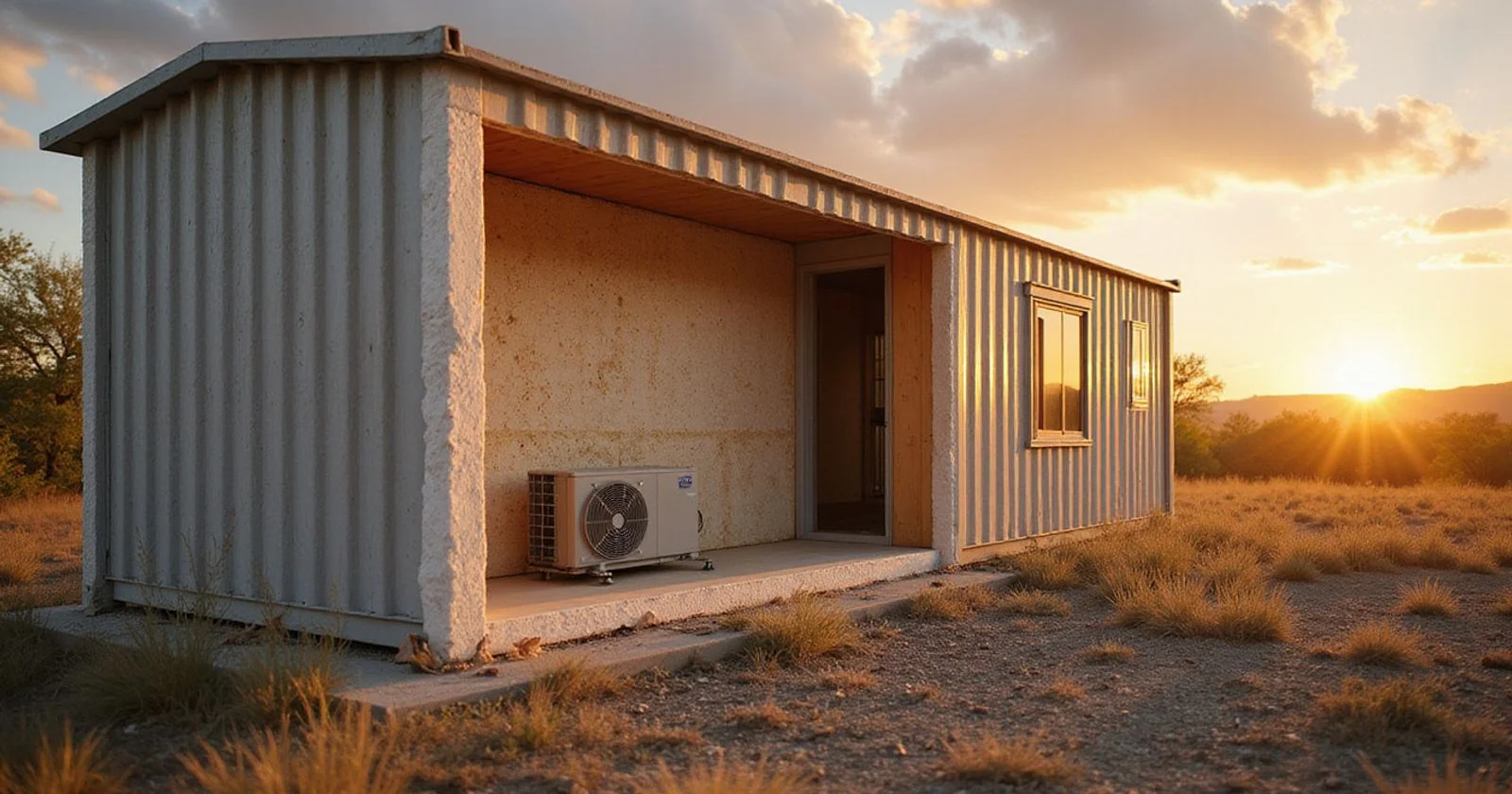
We know the immediate concern you have when researching rural housing options in the South. A bare shipping container sitting in direct sunlight gets incredibly hot. The National Weather Service forecasts above-average temperatures across the state for the summer of 2026. Our ATX CONTAINER HOMES team understands that turning a bare steel shell into a livable space requires a proven, data-backed approach. The right insulation, smart roofing, and correct HVAC sizing completely solve this heat problem. Let’s look at the exact climate control strategies that make insulated container homes Texas buyers love so comfortable.
A Steel Box Doesn’t Have to Be an Oven
Do container homes get hot in Texas? We see this exact question constantly from agricultural buyers and landowners. An unfinished metal box will bake in the sun, but a finished container maintains a cool indoor climate. This stark difference comes down to the quality of the building envelope.
Our construction process uses highly specialized materials to actively combat extreme weather. Heat waves are a verifiable reality, with climate projections predicting longer hot spells for the region in 2026. A targeted design prevents the afternoon sun from turning your property into an oven.
We build these units with three essential components for climate control:
- High-density thermal barriers
- Reflective exterior surface coatings
- High-efficiency air conditioning
Closed-Cell Spray Foam Insulation
Closed-cell spray foam is the absolute core of a comfortable interior space. It delivers an R-value of 6.0 to 7.0 per inch, packing intense thermal resistance into a thin layer. Our teams rely on this specific material because it bonds directly to the corrugated steel walls. This continuous layer immediately stops the condensation that ruins uninsulated metal buildings.
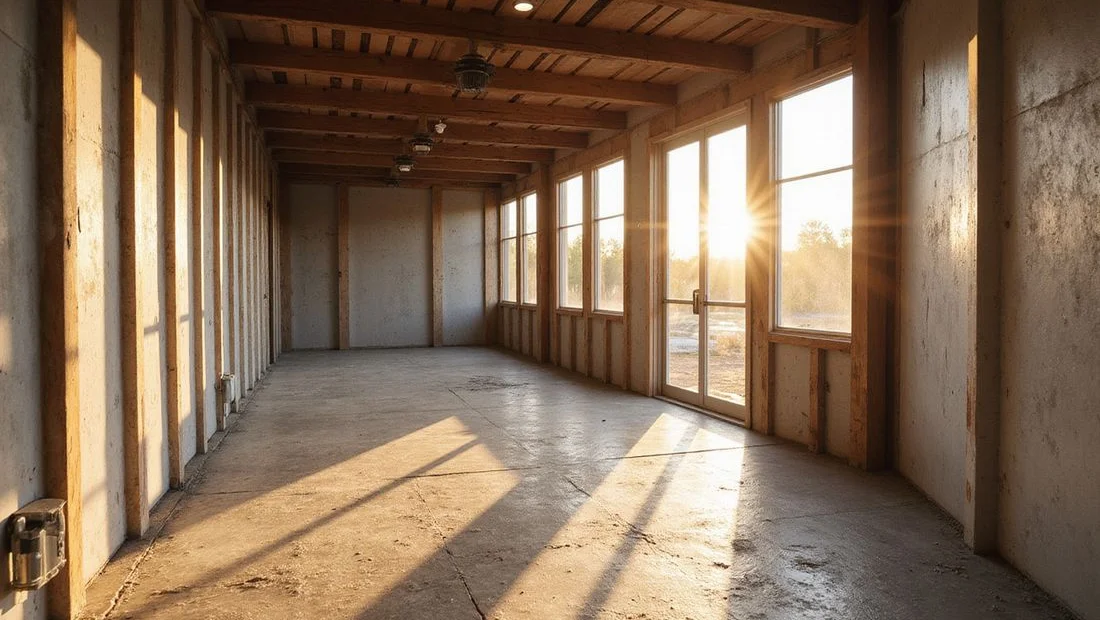
Applying just two inches of closed-cell foam creates a powerful R-14 thermal rating. We prioritize proper container home spray foam insulation to preserve your valuable living space while blocking outside temperatures.
Why Open-Cell Foam Fails Here
That strategy works much better than cutting corners. Budget contractors sometimes use open-cell foam to lower their initial construction costs. We actively avoid open-cell foam for exterior metal walls. That spongy material has a lower density of about 0.5 pounds per cubic foot and easily absorbs ambient moisture.
The denser closed-cell alternative creates a rigid vapor barrier that actually adds structural strength to the steel. Our focus is always on long-term durability for rural setups. Reviewing the technical data makes the choice very clear.
| Feature | Closed-Cell Foam | Open-Cell Foam |
|---|---|---|
| R-Value Per Inch | R-6.0 to R-7.0 | R-3.5 to R-3.8 |
| Moisture Resistance | Excellent (Vapor Barrier) | Poor (Absorbs Water) |
| Best Application | Exterior metal walls | Interior partition walls |
Reflective and Ceramic Roof Coatings
The roof takes the absolute most direct sun during a hot southern summer. Applying a high-quality ceramic coating bounces radiant heat away before it loads the structure. Our builders recommend elastomeric products like the Rust-Oleum 710 Roof Coating. This specific treatment can lower the surface temperature of the metal by up to 50 degrees Fahrenheit.
That massive reduction in surface heat works perfectly with your interior foam. Our designs use this thermal break to drastically cut the cooling demand on hot afternoons.
Long-Term Roof Durability
These ceramic coatings stretch and contract easily with the metal. This flexibility prevents microscopic cracks from forming along the seams. We find that a solid elastomeric layer extends the roof’s lifespan by a decade. Regular maintenance just involves a basic pressure wash.
A clean, white surface stays highly reflective year after year. Our clients appreciate how this single layer transforms the building’s energy footprint. The industry data validates this approach completely.
“According to 2026 energy efficiency data, a bright white elastomeric roof coating can reflect up to 80 percent of the sun’s rays, directly lowering indoor cooling costs.”
Right-Sized Mini-Splits
We consider a properly sized mini-split system the engine of your comfort. A modern unit cools the space efficiently and quietly without wasting electricity. Oversizing the equipment causes it to constantly short-cycle. Our technicians see undersized units fail because the compressor never catches up to the ambient heat.
Matching the exact HVAC capacity to the floor plan solves both problems. Larger layouts frequently utilize a multi-zone or tri-zone setup for optimal airflow.
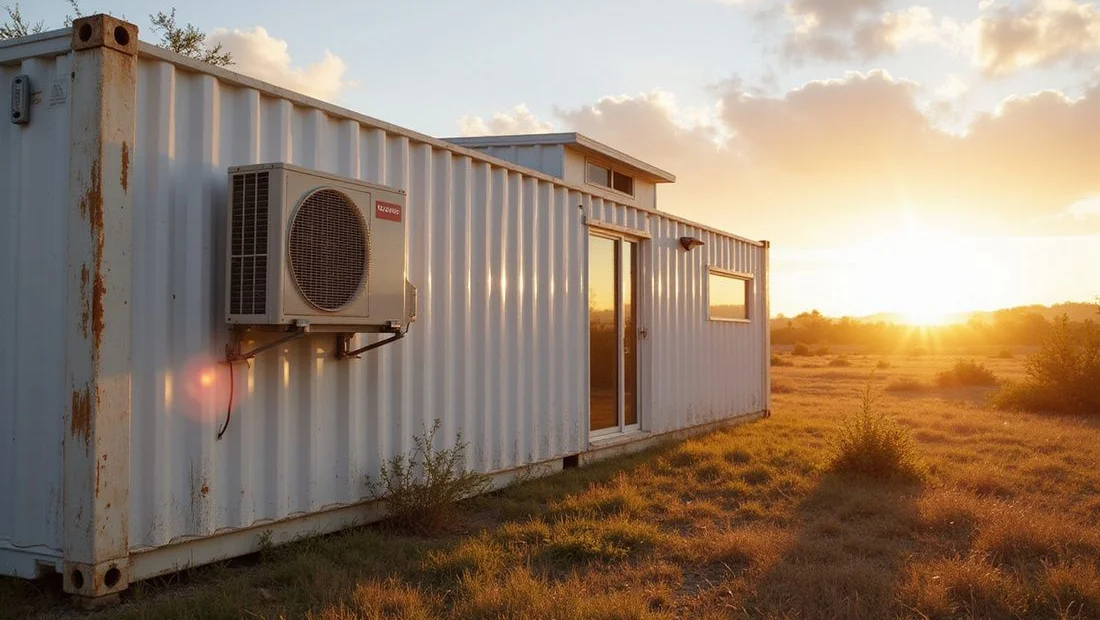
We track the Department of Energy regulations, which now require a minimum of 14.3 SEER2 for southern heat pumps. Upgrading past this legal baseline is a smart financial decision.
Choosing High-Efficiency Brands
Premium models from Mitsubishi or Daikin easily reach over 20 SEER2. Our clients love how these inverter-driven compressors ramp up smoothly instead of aggressively clicking on and off. They excel at pulling excess humidity out of the cabin air. A dry interior feels significantly cooler, saving you money on daily operation.
We recommend these advanced units for handling both brutal summer heat and occasional winter freezes. This dual capability provides complete peace of mind for remote landowners. Our team provides clear choices based on your specific power setup.
| SEER2 Rating | Efficiency Level | Ideal Application |
|---|---|---|
| 14.3 SEER2 | Legal Minimum (South) | Budget-conscious builds |
| 16.0 - 18.0 SEER2 | High Efficiency | Standard residential daily use |
| 20.0+ SEER2 | Ultra-Premium | Off-grid solar power setups |
Low-E Windows and Real-World Performance
We consider Low-E windows the final, essential piece of a complete climate control package. They reject incoming solar heat while still letting natural light flood the interior space. Double-pane windows drastically reduce the workload on your air conditioner. Our builders follow the latest 2026 energy recommendations for maximum efficiency.
Programs like the Austin Energy rebate require a Solar Heat Gain Coefficient (SHGC) of 0.25 or lower. This specific rating means the glass actively blocks 75 percent of the sun’s thermal energy.
The Complete Climate Package
We put all these proven elements together so the space performs perfectly. That means the pre-built homes you purchase stay incredibly comfortable through the absolute worst summer heat. This complete climate insulation package is baked right into the standard price. Our sales team never treats essential comfort features as a hidden upsell.
A fully insulated container homes Texas property provides a durable, reliable shelter for decades. Reach out to discuss your next off-grid project. We recommend verifying these specific window features before buying:
- Double-pane glass construction
- Argon gas fill between the panes
- SHGC rating below 0.25
- Durable, weather-sealed frames